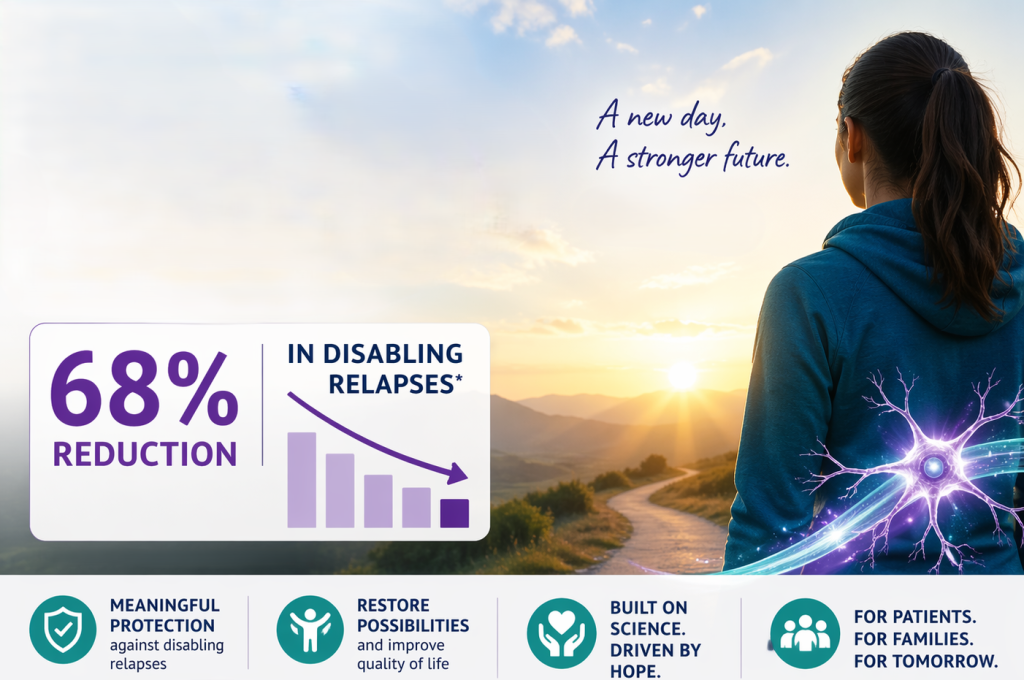
The Phase III METEOROID study, revealed ENSPRYNG (satralizumab) showing reduction in the risk of relapses by 68% in patients compared to placebo,according to the announcement made during the Clinical Trials Plenary Session at the 2026 American Academy of Neurology (AAN) Annual Meeting in Chicago.The METEOROID study met its primary endpoint, demonstrating a significant delay in the time to first relapse. 87% of patients treated with ENSPRYNG remained relapse-free at 48 weeks, compared to 67% in the placebo group. (p=0.0030). The therapy achieved a 66% reduction in the annualized relapse rate (ARR) and a 79% reduction in active MRI lesions. Patients on ENSPRYNG were 73% less likely to require rescue therapies and 17% reduction in the annualised rate of inpatient hospitalisations was observed with ENSPRYNG compared to placebo.
MOGAD ( myelin oligodendrocyte glycoprotein antibody-associated disease )is a rare autoimmune disease primarily driven by acute, unpredictable attacks on the optic nerves, brain, and spinal cord, reducing the frequency of these relapses is the primary goal of treatment. Patients with MOGAD often have elevated IL-6 levels in cerebrospinal fluid (CSF), which promote the inflammation and autoantibody production responsible for damaging the central nervous system. ENSPRYNG utilizes novel recycling antibody technology to inhibit interleukin-6 (IL-6) signaling.
The safety profile observed in the METEOROID study was consistent with ENSPRYNG’s established use in NMOSD, common adverse events included injection-related reactions (16%), influenza (9%), and joint pain (9%).The safety profile was consistent with over a decade of clinical experience, with no new safety signals reported. Roche’s Chief Medical Officer, Levi Garraway, M.D., Ph.D., stated that the study has the potential to “redefine the standard of care” for a community that currently has no approved options. He called it a breakthrough for MOGAD’s first approved relapse therapy, with regulatory filings planned. Roche plans on submitting these results to global regulatory authorities which may act as a ray of shining light for treatment of MOGAD patient’s .
By Pragna Biswas